


Running on empty by 2 p.m.? Rereading the same email three times? Catching every cold that goes around? We tend to blame stress, sleep, or willpower. Those matter, but there’s another piece that often gets overlooked: your body may simply be low on the raw materials it needs to make energy, focus, and a strong immune system.
I put this two-part series together so you can:
A.) Begin connecting how you feel to what you eat,
and
B.) Use this knowledge to make the small changes that make a big difference in improving quality of life and feeling your best every day.
Vitamins and minerals aren’t abstract numbers on a label. Iron carries oxygen to your brain. Magnesium helps your muscles relax. B12 keeps your nerves firing. When one runs low, you often feel it well before a blood test flags a problem.
And most of us are running low on something. A CDC report found only about 1 in 10 U.S. adults eats enough vegetables, and only about 1 in 8 eats enough fruit. Produce is where many of the nutrients below come from.
Today (Part 1), we’ll decode the most common signs of nutrient deficiency, what they may be telling you, and which nutrients are linked to them. On Thursday (Part 2), we’ll turn it into a simple, colorful plan to feel your best every day.
Quick note before we start: symptoms like tiredness have many possible causes, from sleep to thyroid to stress. This guide helps you spot patterns and ask better questions, not diagnose yourself.
How common are nutrient deficiencies?
More than you might think. National survey data show most adults don’t get enough vitamin D or magnesium from food, and about half fall short on vitamin A and calcium.
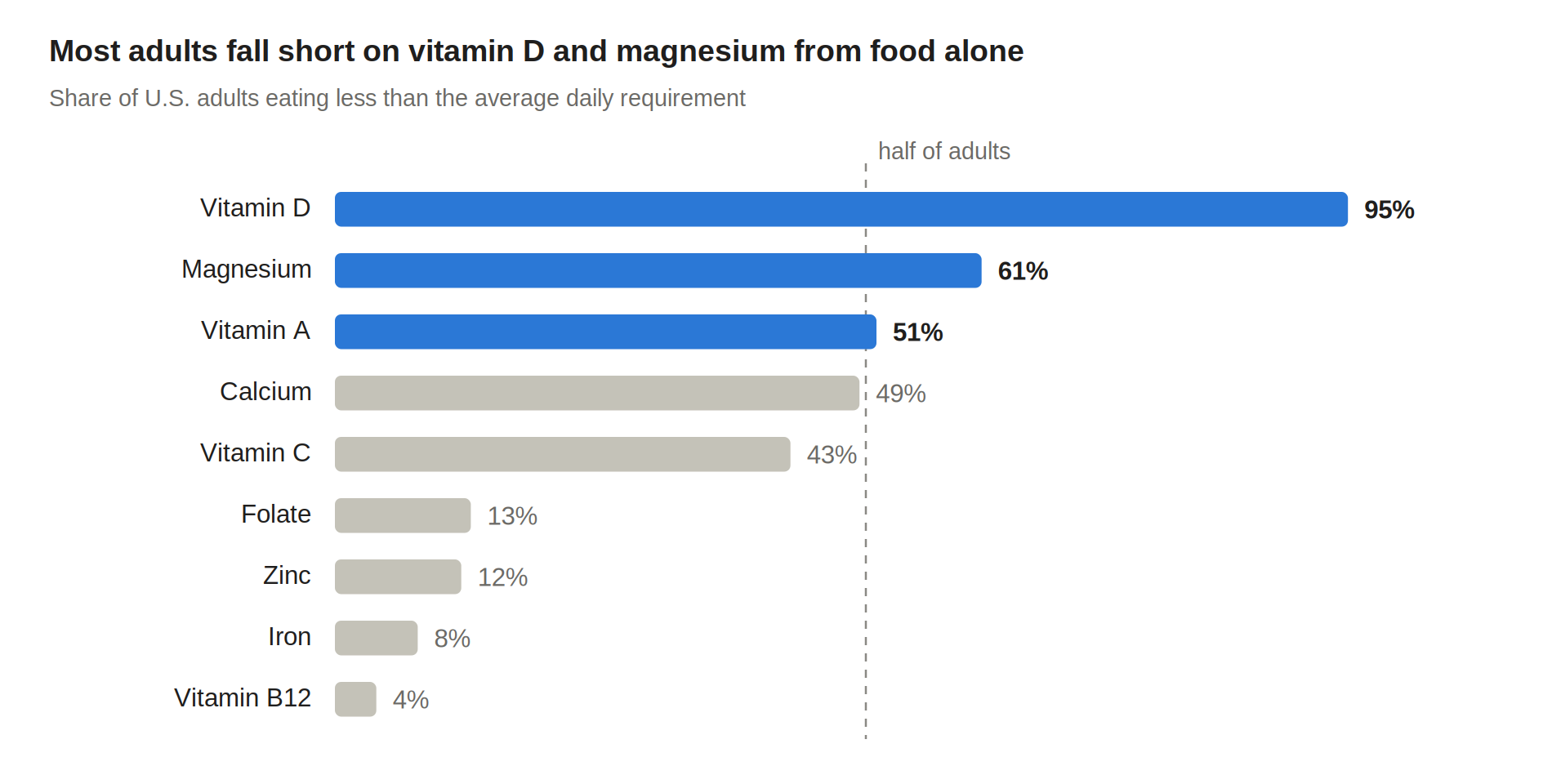
Iron and B12 look fine on average, but averages hide the people most at risk: about 13% of women ages 20 to 49 have low iron stores, and B12 gaps cluster in vegans and older adults. Almost no one reaches the potassium target, and most adults get only about half the fiber they need.
Eating less than the average requirement isn’t the same as being deficient. It means your body has less of a buffer, which is when the subtle feelings below tend to show up.
Nutrient deficiency symptoms: find your pattern
Find the feelings you notice most, then follow the row across to see which nutrients research links to them.
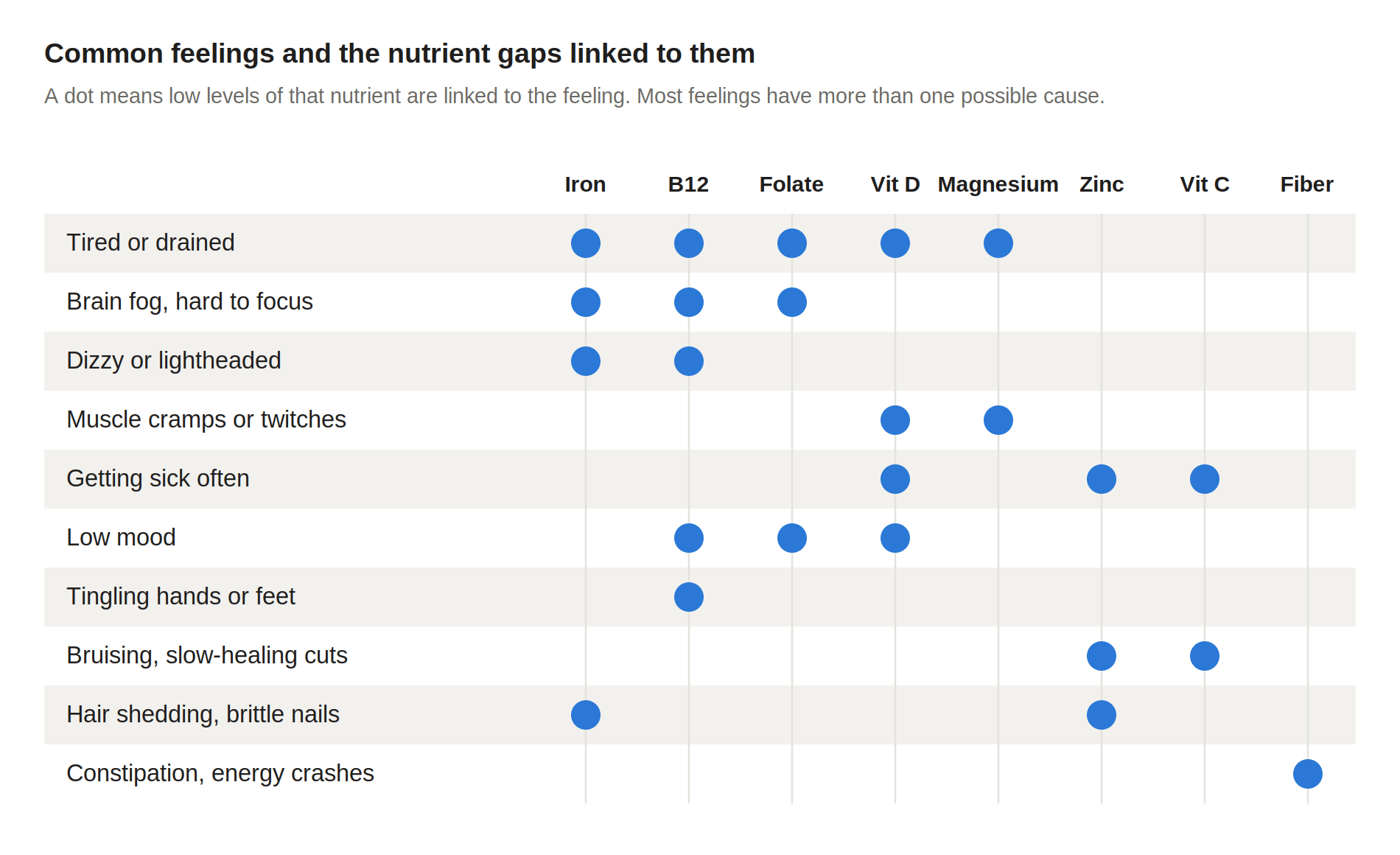
Notice how often iron, B12, and vitamin D come up? They’re tied to energy, focus, and mood, and they’re among the most common gaps. Fiber stands alone on the last row, but almost everyone falls short on it.
Vitamin deficiency symptoms: what low levels feel like
For each nutrient, here’s what it does, how running low can show up in your day, who’s most likely to be short, and the foods that help. Targets are daily amounts for adults ages 19 to 50 (women / men).
Low vitamin D symptoms: the sunshine vitamin
What it does: Helps you absorb calcium and supports your bones, muscles, and immune system.
Low can feel like: Achy bones or muscles, muscle weakness, tiredness, and getting sick more often. Low levels are also linked with low mood, though researchers are still sorting out cause and effect.
Most at risk: People who spend most daylight hours indoors, people with darker skin, adults over 50, and people with higher body weight.
Daily target: 15 mcg (600 IU)
Eat more: Salmon, trout, sardines, eggs, fortified milk or plant milk, and mushrooms grown under UV light.
Low B12 symptoms: the energy and nerve vitamin
What it does: Helps make red blood cells and keeps your nerves healthy.
Low can feel like: Tiredness and weakness, pins and needles in your hands or feet, trouble remembering things, low mood, and a sore, red tongue.
Most at risk: Vegans and vegetarians, adults over 50 (we absorb less as we age), and people taking acid reflux medicine or metformin long-term.
Daily target: 2.4 mcg
Eat more: Fish, eggs, dairy, meat, and fortified nutritional yeast or cereal. B12 is found naturally only in animal foods, so plant-based eaters usually need fortified foods or a supplement.
Low folate symptoms: the cell builder
What it does: Helps make DNA and new cells, including red blood cells.
Low can feel like: Tiredness, weakness, irritability, trouble concentrating, headaches, and mouth sores.
Most at risk: Anyone pregnant or trying to conceive, people who drink alcohol often, and people with digestive conditions like celiac disease.
Daily target: 400 mcg (600 mcg if pregnant)
Eat more: Lentils, beans, spinach, asparagus, avocado, and fortified bread and cereal.
Low vitamin C symptoms: the repair crew
What it does: Builds collagen for skin, gums, and blood vessels, supports immunity, and helps you absorb plant iron.
Low can feel like: Tiredness, bruising easily, cuts that heal slowly, swollen or bleeding gums, dry skin, and frequent colds.
Most at risk: Smokers (they need an extra 35 mg a day) and anyone who eats very little fruit and vegetables.
Daily target: 75 / 90 mg
Eat more: Red bell peppers, kiwi, oranges, strawberries, broccoli, and tomatoes.
Low vitamin A symptoms: the eye and skin protector
What it does: Supports vision, skin, and immune defense.
Low can feel like: Trouble seeing in dim light or at night, dry eyes, dry skin, and getting sick more often.
Most at risk: Rare in the U.S., but more likely with digestive conditions that affect fat absorption or very limited diets.
Daily target: 700 / 900 mcg
Eat more: Sweet potatoes, carrots, spinach, cantaloupe, eggs, and dairy.
Vitamins E and K matter too, but true shortages are rare in healthy adults. Nuts, seeds, and leafy greens cover both.
Mineral deficiency symptoms (plus fiber)
Low iron symptoms: your oxygen delivery system
What it does: Builds hemoglobin, the protein in red blood cells that carries oxygen to your brain and muscles.
Low can feel like: Constant tiredness, weakness, feeling dizzy or lightheaded, getting winded easily during exercise, trouble focusing, headaches, cold hands and feet, pale skin, brittle nails, and hair shedding. Some people crave ice or have restless legs at night.
Most at risk: Women with periods (especially heavy ones), pregnant women, vegetarians and vegans, endurance athletes, and frequent blood donors.
Daily target: 18 / 8 mg (27 mg if pregnant)
Eat more: Lentils, beans, fortified cereal, lean red meat, spinach, tofu, and pumpkin seeds, ideally with a vitamin C food.
Good to know: Iron deficiency is the most common nutrient shortage in the world. You can have low iron stores and feel the effects before you’re officially anemic.
Low magnesium symptoms: the relaxation mineral
What it does: Helps power over 300 processes in the body, including muscle relaxation, nerve signals, energy production, and blood sugar control.
Low can feel like: Muscle cramps or twitches, tiredness, weakness, and poor appetite. Low intake is also linked with headaches and poorer sleep.
Most at risk: People with type 2 diabetes, people who drink alcohol often, older adults, and those taking acid reflux medicine or certain diuretics long-term.
Daily target: 310–320 / 400–420 mg
Eat more: Pumpkin seeds, almonds, spinach, black beans, edamame, avocado, and dark chocolate.
Low zinc symptoms: the immune and healing mineral
What it does: Supports immune defense, wound healing, and your senses of taste and smell.
Low can feel like: Getting sick often, cuts that heal slowly, a dulled sense of taste or smell, hair thinning, and poor appetite.
Most at risk: Vegetarians and vegans, pregnant and breastfeeding women, and people with digestive conditions.
Daily target: 8 / 11 mg
Eat more: Oysters, beef, pumpkin seeds, chickpeas, cashews, and yogurt.
Low calcium: the quiet one
What it does: Builds bones and teeth and helps muscles contract and nerves send signals.
Low can feel like: Usually nothing at first. When you don’t eat enough, your body quietly pulls calcium from your bones, which can lead to bone loss over years.
Most at risk: People who avoid dairy without using fortified swaps, women after menopause, and teens.
Daily target: 1,000 mg (1,200 mg for women over 50)
Eat more: Yogurt, milk, fortified plant milk, tofu made with calcium, canned salmon or sardines with bones, and kale.
Low potassium: the blood pressure balancer
What it does: Balances sodium, helps control blood pressure, and keeps your heartbeat steady.
Low can feel like: Low intake from food usually shows up as higher blood pressure rather than symptoms you can feel. Very low blood levels (usually from illness or medications) cause cramps, weakness, and an irregular heartbeat, which needs a doctor.
Most at risk: People who eat a lot of processed food and little produce.
Daily target: 2,600 / 3,400 mg
Eat more: Potatoes with skin, white beans, bananas, avocado, spinach, and yogurt.
Low fiber signs: the steady-energy nutrient
What it does: Feeds your gut bacteria, slows down sugar absorption, and keeps you full.
Low can feel like: Constipation, bloating, feeling hungry soon after eating, and energy crashes after meals.
Most at risk: Most of us. The average adult gets about half the recommended amount.
Daily target: 25 / 38 g
Eat more: Beans, lentils, raspberries, chia seeds, oats, and vegetables. Add fiber gradually and drink more water to avoid bloating.
Who is most at risk for nutrient deficiencies?
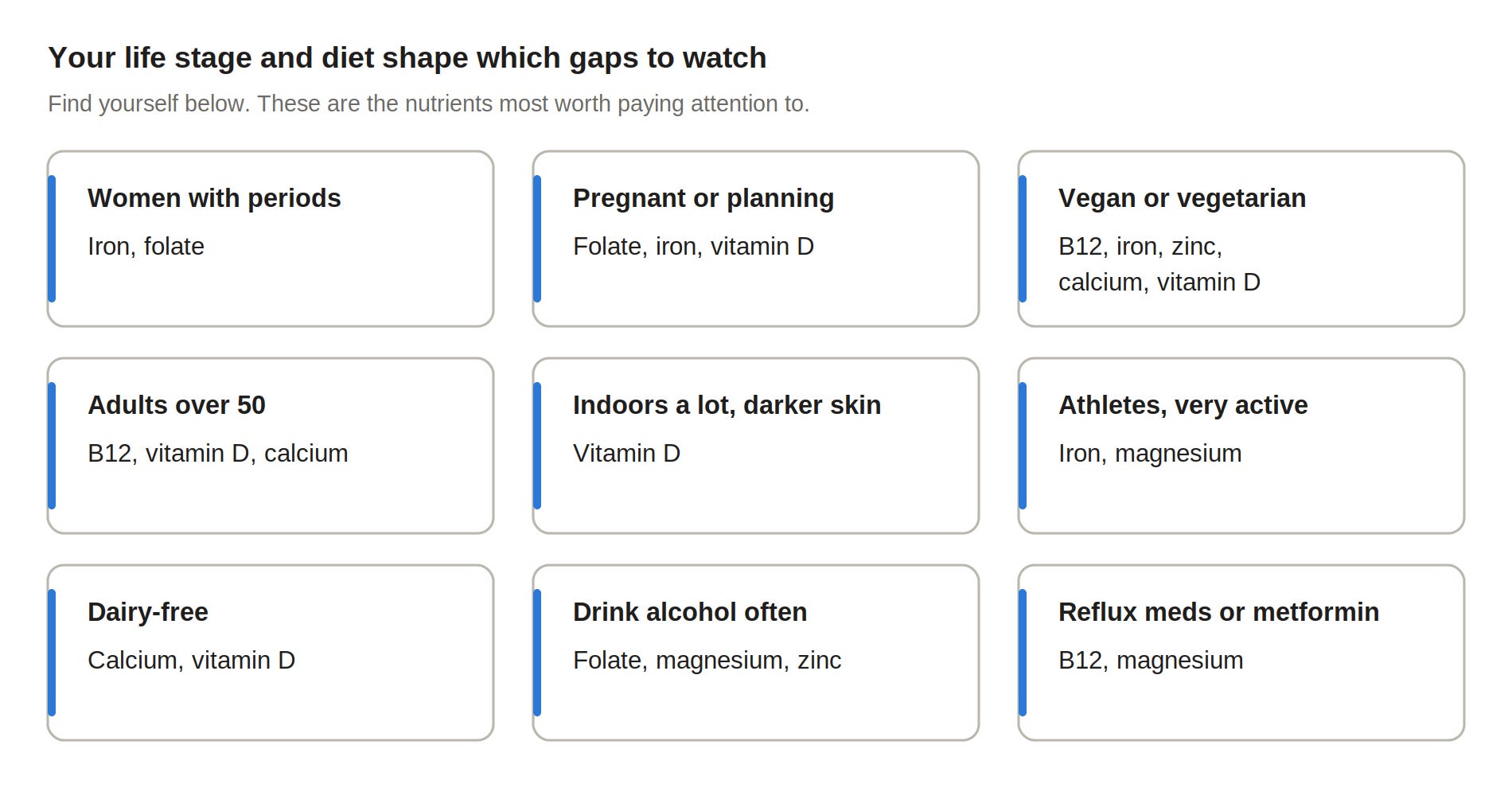
Your needs depend on your body, your stage of life, and how you eat. If you see yourself in more than one box, those nutrients deserve extra attention.
When to get your vitamin levels tested
For most people, eating more colorful whole foods is the right first step. But some situations call for a blood test instead of guessing.
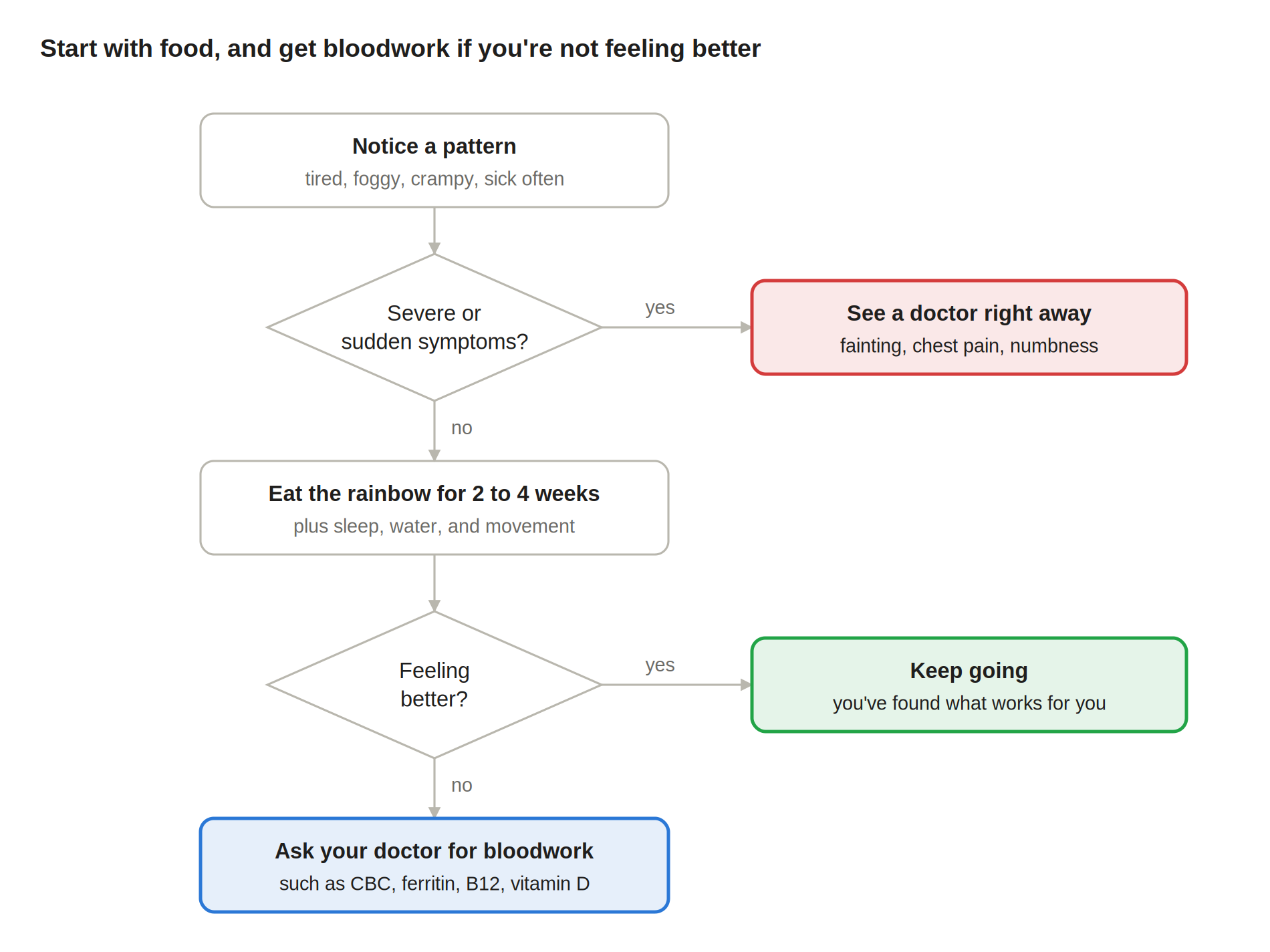
Skip straight to bloodwork if you’re in a higher-risk group above, have heavy periods, follow a vegan diet without supplements, or have felt off for months. A simple test shows exactly what’s low, so you can fix the right thing instead of taking a handful of supplements you may not need.
Coming Thursday: eating the rainbow to feel better, day by day
Now you know what your body might be asking for. On Thursday, we’ll make it simple: how to build a feel-good plate, which colors to reach for based on how you feel, the food pairings that boost absorption, a one-hour weekly meal prep, and a realistic timeline for when you can expect to notice a difference.
Read Part 2: Eating the Rainbow: A Simple Plan to Feel Your Best Every Day (live Thursday).
Your homework until then: Notice which feelings from today’s chart show up for you most, and jot down what you ate yesterday. Count how many colors made it onto your plate.
This guide is for general education, not medical advice. Many symptoms here overlap with other conditions, and too much of some nutrients (like iron, vitamin A, and vitamin D) can be harmful. Talk with your doctor or a registered dietitian before starting supplements, especially if you’re pregnant, take medication, or have a health condition.
Frequently asked questions
What are the most common nutrient deficiencies?
From food alone, most U.S. adults fall short on vitamin D and magnesium, and about half fall short on vitamin A and calcium. Most also miss their potassium and fiber targets. Worldwide, iron deficiency is the most common, especially among women with periods.
What are the signs of low iron?
Common signs include constant tiredness, weakness, dizziness, getting winded easily, trouble focusing, headaches, cold hands and feet, pale skin, brittle nails, and hair shedding.
Can a vitamin deficiency make you tired?
Yes. Low iron, B12, folate, vitamin D, and magnesium are all linked to fatigue. Tiredness has many other causes too, so talk with your doctor if it lasts more than a few weeks.
How do I know if I have a nutrient deficiency?
Symptoms can point you in the right direction, but only a blood test can confirm a deficiency. Ask your doctor about tests like a CBC, ferritin, B12, and vitamin D.
About the author
Hannah is the founder of Luminary Collective, a science-rooted wellness house for women. She holds a B.S. in Health Science from the University of North Florida and is a NASM Certified Personal Trainer, ACE Cancer Exercise Specialist, and Pilates instructor.
Sources
Lee SH, et al. Adults Meeting Fruit and Vegetable Intake Recommendations, United States, 2019. CDC MMWR, 2022.
Linus Pauling Institute, Oregon State University. Micronutrient Inadequacies in the US Population: an Overview (NHANES intake data and iron status in women).
National Institutes of Health, Office of Dietary Supplements. Health professional fact sheets on vitamin D, vitamin B12, folate, vitamin C, vitamin A, iron, magnesium, zinc, calcium, and potassium.
World Health Organization. Anaemia fact sheet.
Dietary Guidelines for Americans, 2020–2025 (fiber targets and shortfall