


Growing up, I struggled with ADHD. I was at constant war with my own mind. I had so much ambition, with a world of tasks I desperately wanted to complete and standards I wanted to achieve, and zero ability to start any of them. I was so overwhelmed with different thoughts that I struggled to carry on conversations, let alone start chasing my dreams of accomplishing the world. I felt a quiet internal shame for this, which compounded into a deep existential anxiety, worsening my self-image and therefore my self-care. This was a self-perpetuating loop for quite some time in high school.
Training disrupted that loop, noticeably and in a holistic way I did not know was possible. In 12th grade I started running, and very quickly found a love for having one single goal that I could watch myself continue to improve at. This sense of accomplishment and tangible visual of self-growth improved my confidence, quieted my mind, and for the first time, I found it easy to focus, be myself in social settings, and not let my difference run my life. Now I know that on the days I move, I can think. I can start things. I feel more like myself. And I have been able to function in everyday life without medication in a way I once didn’t believe was possible.
That is my story, and it is only one story. So in this article I want to go further than personal experience. I want to walk through what the research actually shows about movement and the mind, where the evidence is strong, where it is still early, and what it means for ADHD and for other mental health conditions.
How to Read This Article
Not all evidence is equal, and I think you deserve to know the difference. Throughout this piece I lean on meta-analyses and systematic reviews, which pool the results of many studies, because they are more reliable than any single trial. When I cite a small pilot study, I will say so. When the research is thin, I will say that too. Numbered references are listed at the end.
Part One: What Happens in Your Brain When You Move
Three things matter most here.
Dopamine and norepinephrine. These chemical messengers regulate attention, motivation, and the ability to hold a goal in mind long enough to act on it. They are also the same two systems most ADHD medications target. Previous research indicates that physical activity can increase cortical volume, enhance brain activation, and boost connectivity in cognitive regions, as well as raise dopamine and norepinephrine levels, effects similar to psychostimulants. [1]
BDNF. Brain-derived neurotrophic factor is a protein that supports the growth and survival of neurons. I think of it as fertilizer for the brain. A meta-analysis of 29 studies found a moderate increase in BDNF after a single session of exercise, that regular exercise intensified that effect, and a small effect of regular exercise on resting BDNF levels. [3] One detail I found important as someone building a community with a lot of women in it: studies with more women showed less BDNF change from exercise, suggesting the magnitude of these effects may be lower in females relative to males. [3] That doesn’t mean exercise works less for women overall. It means we need more research that actually includes us.
Executive function. This is the umbrella term for the mental skills that let you plan, focus, switch between tasks, and resist impulses. The three core components are inhibitory control (stopping or overriding impulses), working memory (holding and manipulating information in mind), and cognitive flexibility (switching between tasks or perspectives). [1] For people with ADHD, executive function is where daily life gets hard. It is also where exercise seems to help most.
Part Two: Focus
Most of the ADHD exercise research has been done in children, so let’s start there and then look at adults.
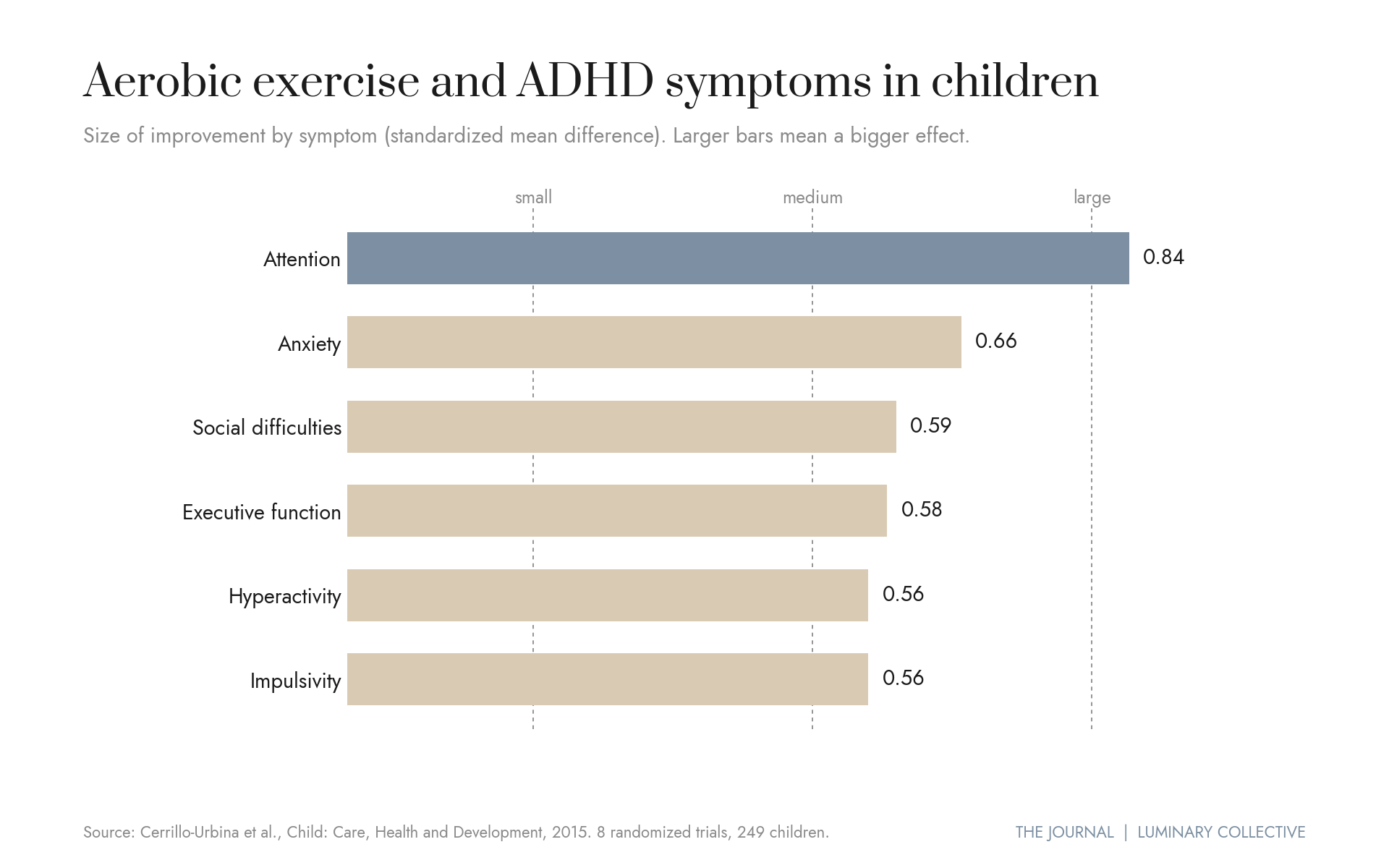
A 2015 meta-analysis of randomized controlled trials found that aerobic exercise had a moderate to large effect on core symptoms such as attention, hyperactivity, and impulsivity, and on related symptoms such as anxiety, executive function, and social problems in children with ADHD. [2] It is worth noting this analysis included eight randomized controlled trials with 249 participants, which is a modest amount of data.
The type of movement seems to matter. A more recent meta-analysis found that open-skill sports had a moderate effect on inhibitory control, working memory, and cognitive flexibility, while closed-skill sports did not significantly improve executive functions. [16] Open-skill activities are ones where you react to a changing environment, like team sports, martial arts, dance with a partner, or racket sports. Closed-skill activities are predictable and repetitive, like running or stationary cycling. My interpretation: movement that challenges your brain while it challenges your body may give you more cognitive return.
Now adults. A 2026 meta-analysis of adults with ADHD found so few studies on regular exercise programs, only four total, that no firm conclusions could be drawn about long-term interventions. [1] But the single-session results were encouraging. Across four moderate-to-high-quality studies involving 152 adults with ADHD, single exercise sessions produced moderate improvements in inhibitory control. Adults not taking medication showed large improvements. [1] That finding lines up closely with my own experience, and I share it with the caveat the authors themselves give: these are preliminary findings, and more well-designed trials are needed to determine the best type, intensity, and frequency of exercise for adult ADHD. [1] Meta-analysis Finds Small to Moderate Benefits of Single Exercise Sessions for Adult ADHD +2
In plain terms: a workout before a demanding task may genuinely help you focus, and the effect may be most noticeable if you aren’t medicated. We just don’t yet know the ideal “prescription.”
Part Three: Confidence
Psychologist Albert Bandura identified mastery experiences, actually doing something hard and seeing yourself succeed, as one of the most powerful sources of self-belief, which he called self-efficacy [4].
Training is a mastery experience you can repeat on purpose. You lift something you couldn’t lift last month. You hold a position longer. You show up on a day you didn’t want to. Each small win is evidence, and evidence is harder to argue with than affirmations.
Strength training in particular has strong support for mental health outcomes. A meta-analysis of 33 randomized trials found that resistance exercise training was associated with a significant reduction in depressive symptoms, with a moderate-sized effect. [5] What I find most meaningful is that the benefit appeared regardless of health status, total prescribed volume of exercise, or whether participants actually got stronger. [5] You don’t have to hit a strength milestone for training to change how you feel. The act of showing up and doing the work appears to matter on its own.
Part Four: Getting Things Done
Task completion isn’t about willpower. It depends on starting (task initiation), staying with it (sustained attention), and following through. These are executive functions, and research suggests they respond to training.
Exercise supports task completion in a few ways. The first is the short-term cognitive boost after a session, which is why I schedule my hardest work right after I train. The second is structure. A consistent training routine anchors the day, and for an ADHD brain, structure is not restrictive. It is a relief. The third is momentum. Finishing a workout is finishing something, and starting the day with a completed task changes how the rest of the day feels.
Duration and consistency seem to matter too. In children and adolescents with ADHD, one analysis found interventions lasting at least twelve weeks were about three times more effective than those lasting six to twelve weeks, though the authors cautioned that the overall certainty of the evidence was low. [1] The takeaway I draw is simple: give it time before you judge whether it works for you. adhdevidenceadhdevidence
Part Five: Being Yourself
This is the hardest thing to measure and, to me, the thing that matters most.
When your nervous system is stuck in a stress response, it is hard to feel like yourself. You become reactive, guarded, and scattered. Regular movement helps regulate the stress response, improves sleep, and builds body awareness, which researchers call interoception. People who can read their own internal signals tend to be better at understanding and regulating their emotions.
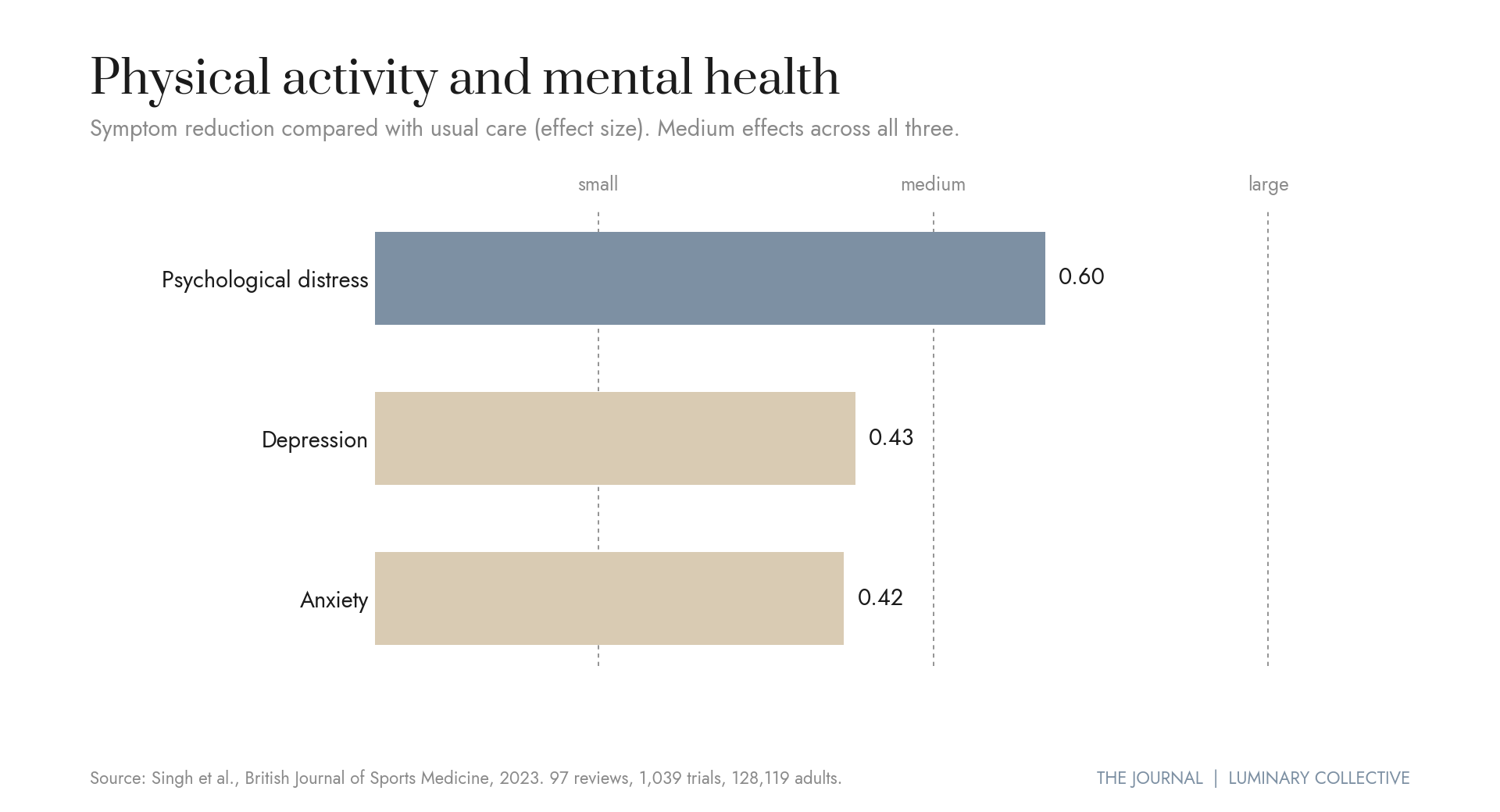
The broader evidence on mood backs this up. The most comprehensive review to date, encompassing 97 reviews, 1,039 trials, and 128,119 participants, found that physical activity had medium effects on depression, anxiety, and psychological distress compared with usual care across healthy adults, people with mental health disorders, and people with chronic conditions. [7] neurosciencenewsphysiciansweekly
When I train consistently, I spend less energy managing my brain and more energy being who I am. I am more patient, more present, and more willing to take up space. That, to me, is quality of life at the mental level.
Part Six: Different Movement, Different Benefits
No single type of exercise is best for everyone, but some patterns stand out.
The large 2024 BMJ network meta-analysis on depression found that the greatest effects were seen for walking, jogging, yoga, and strength training, and the most well-tolerated modalities were yoga and strength training. [6] Tolerability matters because a program you drop out of can’t help you. It’s also worth knowing that in that analysis, confidence in the evidence was low for walking or jogging and very low for other treatments, so these rankings are a guide, not a guarantee. PcMED ProjectPcMED Project
Intensity matters as well. The 2023 umbrella review found that greater improvements in symptoms were associated with higher-intensity physical activity, and, somewhat surprisingly, that interventions of 12 weeks or shorter were the most effective at reducing mental health symptoms. [7] mcknightsseniorlivingunisa
Here is how I summarize it for my own programming:
Aerobic exercise (walking, running, cycling, swimming) has strong evidence for short-term attention benefits and mood.
Strength training is consistently linked to reduced depressive symptoms and is one of the best-tolerated options.
Mind-body practices (yoga, Pilates, tai chi) support nervous system regulation and body awareness. Yoga has solid evidence for depression. Pilates specifically has been studied far less, so I recommend it for what I know it builds, focus, control, and body awareness, rather than claiming research it doesn’t yet have.
Open-skill and social movement (dance, martial arts, team sports) combines physical and cognitive challenge and adds connection, and it shows the strongest executive function effects in young people with ADHD.
The best form of exercise is the one you will actually keep doing. A combination is even better.
Part Seven: Beyond ADHD
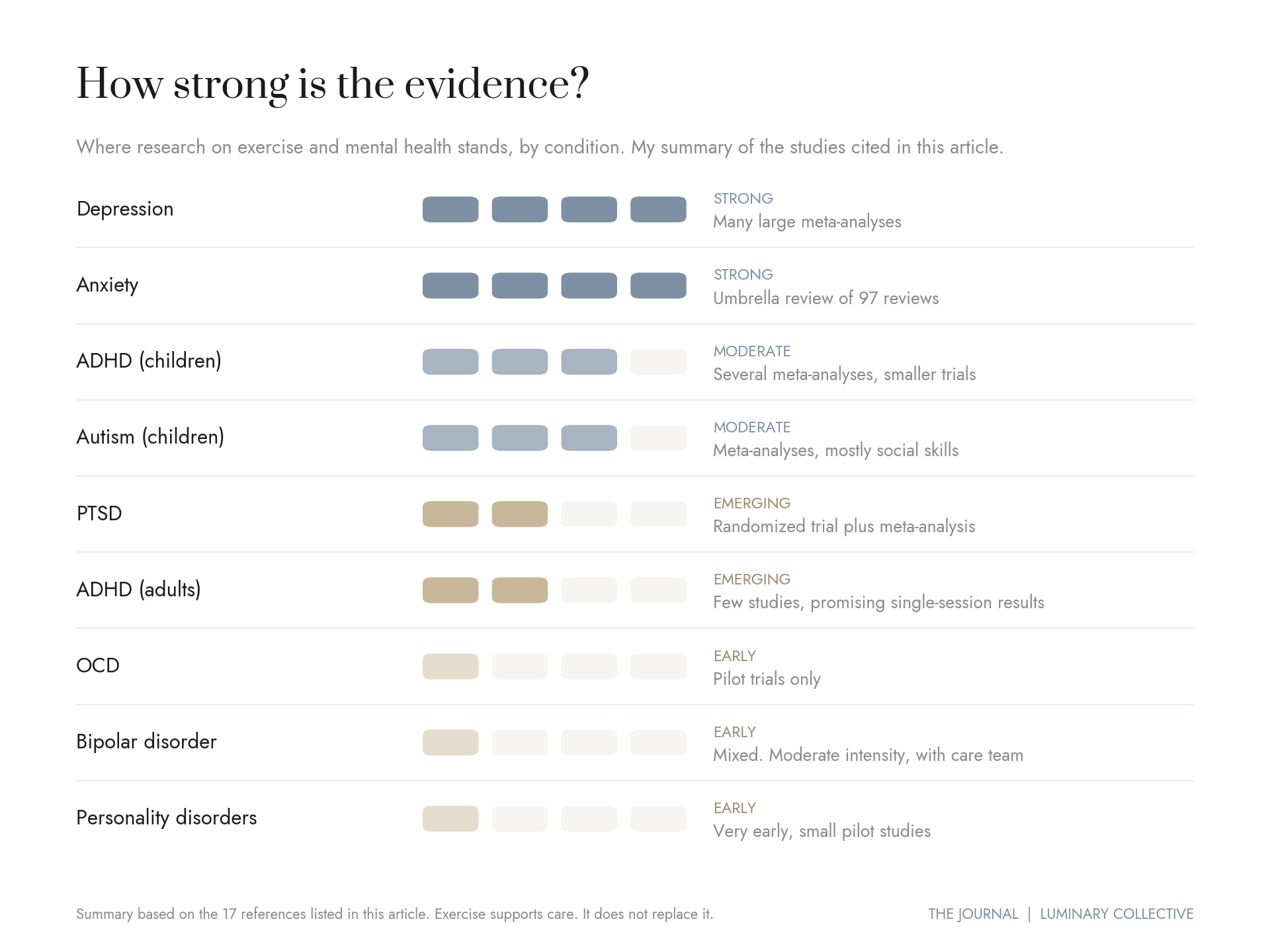
ADHD is where I started, but the relationship between movement and mental health extends much further. Here is where the evidence stands for several other conditions.
Depression. This is the most researched area. Beyond the BMJ and umbrella reviews above [6, 7], resistance training alone shows meaningful benefit, and it appeared to have a greater effect on people with mild to moderate depression compared with those without depression. [5] psychnews
Anxiety. The umbrella review found medium-sized reductions in anxiety symptoms across populations [7]. Exercise also teaches your body that a racing heart and fast breathing are not always danger signals, which can gradually reduce fear of the sensations anxiety produces.
PTSD. In a randomized trial of 81 people receiving inpatient PTSD treatment, the exercise program involved three 30-minute resistance training sessions a week plus a pedometer-based walking program, added to usual care. [8] PTSD symptoms dropped significantly more in the exercise group, and there were also differences in depressive symptoms, waist circumference, sleep quality, and sedentary time. [8] A meta-analysis by the same research group is listed in the references for anyone who wants to go deeper [9]. For people whose trauma lives in the body, movement that builds a felt sense of safety and control can be especially meaningful. georgeinstitutegeorgeinstitute
Autism. A 2024 meta-analysis of sixteen studies found a significant improvement in social skills among children with autism following physical exercise interventions, with programs lasting more than 12 weeks recommended for better results. [10] Most research is in children, and structured, predictable movement settings tend to work well. nih
OCD. The research here is early. In a pilot randomized trial of people whose OCD persisted despite treatment, both the aerobic exercise group and a health education group showed significant reductions in OCD severity, depression, and anxiety, with no difference between them. However, 30.4% of the exercise group met the criteria for treatment response, compared with 7.7% of the education group. [11] A follow-up analysis found that exercise sessions produced larger increases in positive mood and reductions in anxiety and compulsions than control sessions, but no significant effects on obsessions. [12] Promising, but not proof. urinih
Bipolar disorder. This is where nuance matters most. A systematic review found that physical activity was associated with fewer depressive symptoms, better quality of life, and increased functioning, but some evidence indicates a relationship between vigorous exercise and mania. [13] A 2025 meta-analysis found benefits for depressive and anxiety symptoms, while the effect on manic symptoms remains inconclusive. [17] For anyone with bipolar disorder, I believe moderate, consistent movement built into a broader treatment plan is the wise approach, with extra attention to sleep and to intensity during periods of elevated mood. ufcfrontiersin
Borderline personality disorder and other personality disorders. Honestly, the research is very thin. What exists is small but interesting. In one study of women with BPD doing four weeks of supervised exercise, participants reported being less reactive and more patient when encountering irritating or stressful events. [14] That study involved only seven participants. A long-term observational study found that patients with BPD who never recovered were significantly more inactive than those who did recover [15], though that shows an association, not cause and effect. Because emotional regulation is central to BPD, and exercise supports emotional regulation more broadly, researchers see real potential here. I would call it a reasonable support, not an established treatment. unimibdoaj
A note on our relationship with exercise. For some people, especially those with a history of disordered eating or compulsive patterns, exercise can become something that harms rather than helps. If movement starts to feel like punishment, or skipping a session brings panic, that is worth talking about with a professional. The goal is always a relationship with movement that makes your life bigger, not smaller.
Part Eight: Movement Is Not a Replacement for Care
I want to be clear about this for you, your mental health is of upmost importance. Training has made an enormous difference for me without medication, but that is my path, not a prescription for anyone else. Even the researchers most excited about exercise and ADHD are careful here: current meta-analyses do not show that exercise can replace standard treatments for reducing the core symptoms of ADHD. [1] adhdevidence
For many people, medication and therapy are life-changing, and exercise works best alongside them, not instead of them. If you’re considering changing any part of your treatment, please do it with your provider.
What I believe is this: you did not choose the brain you were born with. But through awareness and deliberate practice, you get to participate in what it becomes. Movement is one of the most powerful tools we have for doing that.
Part Nine: Putting It Into Practice
Start smaller than you think you need to. A brisk ten minute walk before a work block. One Pilates or yoga session a week. Two short strength workouts. If you can, add something with an open-skill element, like a dance class, a partner sport, or martial arts.
Then track how you feel in the hours afterward, especially your focus, your mood, and how easily you start things. Let that be your data. Give it at least twelve weeks before deciding whether it’s working.
Not because you have to fix yourself. Because you deserve to feel like yourself.
This is the science of becoming. If you would like to know more, you can read where this all begins in my welcome post.
With Warmth,
Hannah
References
Xu S, Zhao C, Hu L. The effects of acute and chronic exercise on executive functions and core symptoms in adults with ADHD: A systematic review and meta-analysis. Psychology of Sport and Exercise. 2026;84:103088. doi:10.1016/j.psychsport.2026.103088 (summarized by The ADHD Evidence Project, adhdevidence.org)
Cerrillo-Urbina AJ, García-Hermoso A, Sánchez-López M, Pardo-Guijarro MJ, Santos Gómez JL, Martínez-Vizcaíno V. The effects of physical exercise in children with attention deficit hyperactivity disorder: a systematic review and meta-analysis of randomized control trials. Child: Care, Health and Development. 2015;41(6):779–788. doi:10.1111/cch.12255
Szuhany KL, Bugatti M, Otto MW. A meta-analytic review of the effects of exercise on brain-derived neurotrophic factor. Journal of Psychiatric Research. 2015;60:56–64. doi:10.1016/j.jpsychires.2014.10.003
Bandura A. Self-efficacy: Toward a unifying theory of behavioral change. Psychological Review. 1977;84(2):191–215.
Gordon BR, McDowell CP, Hallgren M, Meyer JD, Lyons M, Herring MP. Association of efficacy of resistance exercise training with depressive symptoms: meta-analysis and meta-regression analysis of randomized clinical trials. JAMA Psychiatry. 2018;75(6):566–576. doi:10.1001/jamapsychiatry.2018.0572
Noetel M, Sanders T, Gallardo-Gómez D, et al. Effect of exercise for depression: systematic review and network meta-analysis of randomised controlled trials. BMJ. 2024;384:e075847. doi:10.1136/bmj-2023-075847
Singh B, Olds T, Curtis R, et al. Effectiveness of physical activity interventions for improving depression, anxiety and distress: an overview of systematic reviews. British Journal of Sports Medicine. 2023. doi:10.1136/bjsports-2022-106195
Rosenbaum S, Sherrington C, Tiedemann A. Exercise augmentation compared with usual care for post-traumatic stress disorder: a randomized controlled trial. Acta Psychiatrica Scandinavica. 2015;131(5):350–359.
Rosenbaum S, Vancampfort D, Steel Z, Newby J, Ward PB, Stubbs B. Physical activity in the treatment of post-traumatic stress disorder: a systematic review and meta-analysis. Psychiatry Research. 2015;230(2):130–136. doi:10.1016/j.psychres.2015.10.017
Koh SH. Analyzing the influence of physical exercise interventions on social skills in children with autism spectrum disorder: insights from meta-analysis. Frontiers in Psychology. 2024. doi:10.3389/fpsyg.2024.1399902
Abrantes AM, Brown RA, Strong DR, et al. A pilot randomized controlled trial of aerobic exercise as an adjunct to OCD treatment. General Hospital Psychiatry. 2017;49:51–55. doi:10.1016/j.genhosppsych.2017.06.010
Abrantes AM, Farris SG, Brown RA, et al. Acute effects of aerobic exercise on negative affect and obsessions and compulsions in individuals with obsessive-compulsive disorder. Journal of Affective Disorders. 2019;245:991–997. doi:10.1016/j.jad.2018.11.074
Melo MCA, Daher EF, Albuquerque SGC, de Bruin VMS. Exercise in bipolar patients: a systematic review. Journal of Affective Disorders. 2016;198:32–38.
St-Amour S, Brunet E, Cailhol L, Baretta D, Chevance G, Bernard P. Effects of supervised physical exercise on emotions among adult women with a diagnosis of borderline personality disorder. Asian Journal of Sport and Exercise Psychology. 2024;4(2):46–59.
Glass IV, Frankenburg FR, Zanarini MC. Longitudinal description and prediction of physical inactivity among patients with borderline personality disorder and personality-disordered comparison subjects. Borderline Personality Disorder and Emotion Dysregulation. 2024;11. doi:10.1186/s40479-024-00253-4
Song Y, Fan B, Bai X, Yu H. Meta-analysis of the effect of exercise interventions on executive function among children and adolescents with attention deficit hyperactivity disorder. Chinese Journal of Child Health Care. 2023;31(9):1010–1016. doi:10.11852/zgetbjzz2022-1568
Li X, Liu F, Ding F, Ma X, Zhu Y. Exercise interventions for depressive, manic, and anxiety symptoms in bipolar disorder: a systematic review and meta-analysis. Frontiers in Psychiatry. 2025;16:1648008. doi:10.3389/fpsyt.2025.1648008
The ADHD Evidence Project. Meta-analysis finds long-term exercise associated with moderate improvements in executive functioning for children and adolescents with ADHD. adhdevidence.org. 2026.