


Every meal you eat becomes part of you. The fiber, colors, vitamins and protein on your plate turn into the cells, hormones, neurotransmitters and gut bacteria that shape how you think, move and feel.
That is not a reason for guilt. It is a reason for hope. If you have been running on drive-thru breakfasts, packaged snacks and whatever is fastest, you are not failing. You are living inside a food system built for convenience, not nourishment. And it means there is a huge amount of room for you to feel better than you do right now.
Your mind, your consciousness and your physical body do an extraordinary amount of work for you every day. They deserve the raw materials to hold you up well. This article walks through what the science says happens inside you when you shift from mindless, processed eating to real, whole food, what you are likely to feel, and a simple plan you can start today.
Where most of us are starting from
The typical American plate is built mostly from factory-made food, and that is exactly why so many of us have so much room to feel better.
53% of adult calories come from ultra-processed foods, according to CDC data from 2021–2023. Young adults (19–39) are highest at 54.4%. Burgers, sandwiches and sweet bakery goods top the list. CDC NCHS Data Brief 536
About 1 in 10 adults eats enough vegetables, and about 1 in 8 eats enough fruit. Adults aged 18–30 do the worst, at 7.1% for vegetables. CDC MMWR, 2022
Fewer than 5% of Americans get enough fiber. Median intake is 12–14 grams a day against a recommended 28–42 grams, a 50–70% shortfall. Advances in Nutrition
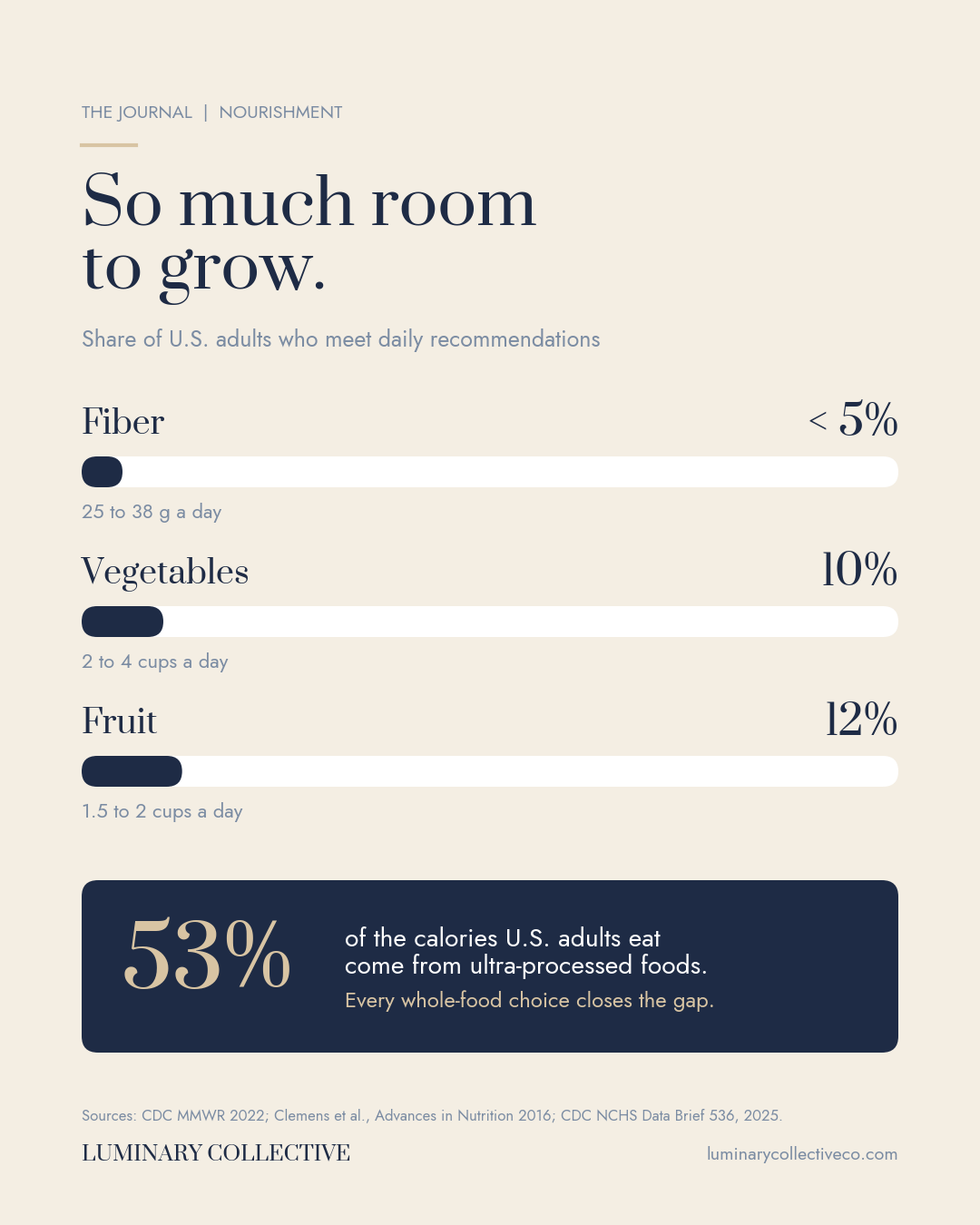
Read those numbers as an opportunity, not a verdict. When the gap is this wide, even small, steady changes produce changes you can feel. You do not have to be perfect. You only have to move toward real food more often than you did last week.
A quick note on terms. “Ultra-processed” (the NOVA system’s category 4) means industrial formulations built from refined starches, sugars, oils and additives such as emulsifiers, colors and flavorings. Frozen vegetables, canned beans, plain yogurt and whole-grain bread with a short ingredient list are processed a little, and they are great choices.
The science: what real food does inside you
Whole foods do not just carry fewer “bad” things. They deliver working materials your body cannot run well without. Here is what each piece does.
Fiber feeds the ecosystem inside you
You cannot digest fiber, but the trillions of microbes in your gut can. When they ferment it, they produce short-chain fatty acids such as butyrate. Butyrate is the main fuel for the cells lining your colon, helps keep the gut barrier sealed, and calms inflammation. Fiber also slows how fast sugar enters your blood and triggers fullness hormones, so you stay satisfied longer.
The long-term payoff is large. A Lancet series of meta-analyses covering nearly 40 years of research found a 15–30% lower risk of death from all causes and from heart disease, plus less heart disease, stroke, type 2 diabetes and colorectal cancer, in people who ate the most fiber. Benefits were strongest at 25–29 grams a day, with more likely better. Reynolds et al., The Lancet, 2019
Antioxidants and phytonutrients: your built-in repair crew
Every cell makes reactive molecules called free radicals just by producing energy. Stress, poor sleep, smoking and highly processed diets add more. Antioxidants (vitamin C, vitamin E, carotenoids) and plant compounds called polyphenols (in berries, greens, cocoa, olive oil, tea and herbs) help keep that damage in check and switch on your cells’ own defense systems. The deeper the color of a plant, the more of these compounds it usually carries, which is why “eat the rainbow” is more than a slogan.
Vitamins and minerals: the spark plugs of metabolism
Vitamins and minerals are cofactors: the helpers enzymes need to do their jobs. B vitamins turn food into usable energy. Magnesium takes part in hundreds of reactions, including muscle relaxation and sleep regulation. Iron carries oxygen to your brain and muscles. Folate, B6 and B12 are needed to build neurotransmitters like serotonin and dopamine. Real food delivers these in combinations your body is built to absorb, alongside fiber and fats that help absorption.
Protein from real food: the building blocks
Protein supplies amino acids for muscle, skin, hair, hormones, immune cells and brain chemicals. It is also the most filling macronutrient and steadies blood sugar when eaten with carbohydrates. Real-food sources (eggs, fish, poultry, Greek yogurt, beans, lentils, tofu, tempeh) come packaged with other nutrients too: omega-3s in fish, fiber in legumes, calcium in dairy.
What changes when food is ultra-processed
The clearest experiment comes from the NIH. Twenty adults lived in a research ward and ate an ultra-processed diet for two weeks and an unprocessed diet for two weeks. Meals were matched for calories, sugar, fat, sodium, fiber and macronutrients, and people could eat as much as they liked. On the ultra-processed diet they ate about 500 more calories a day, ate faster, and gained weight. On the unprocessed diet they lost weight. Hall et al., Cell Metabolism, 2019
That matters because it shows the problem is not willpower. Ultra-processed food is engineered to be soft, fast and easy to overeat. Real food gives your body the signals it needs to know when it has had enough.
At the population level, a 2024 BMJ umbrella review of 45 pooled analyses and nearly 10 million people linked higher ultra-processed food intake to 32 health outcomes, most strongly heart and metabolic disease, common mental disorders and early death. These are associations, not proof of cause, but they point in one clear direction. Lane et al., BMJ, 2024
Your gut talks to your brain
Your gut and brain are in constant conversation through the vagus nerve, immune signals and chemicals your gut microbes produce. Most of the body’s serotonin is made in the gut. It does not cross directly into the brain, but the health of your gut shapes inflammation and signaling that do.
In a 10-week Stanford trial, adults who ate more fermented foods (yogurt, kefir, kimchi, sauerkraut, kombucha) increased their gut microbe diversity and lowered 19 inflammatory proteins in their blood. Wastyk et al., Cell, 2021
And in the SMILES trial, adults with moderate to severe depression who got 12 weeks of support to eat a Mediterranean-style whole-food diet were far more likely to reach remission than those given social support alone: 32.3% versus 8.0%. Diet was an addition to their existing care, not a replacement. Jacka et al., BMC Medicine, 2017
How you are likely to feel, day to day
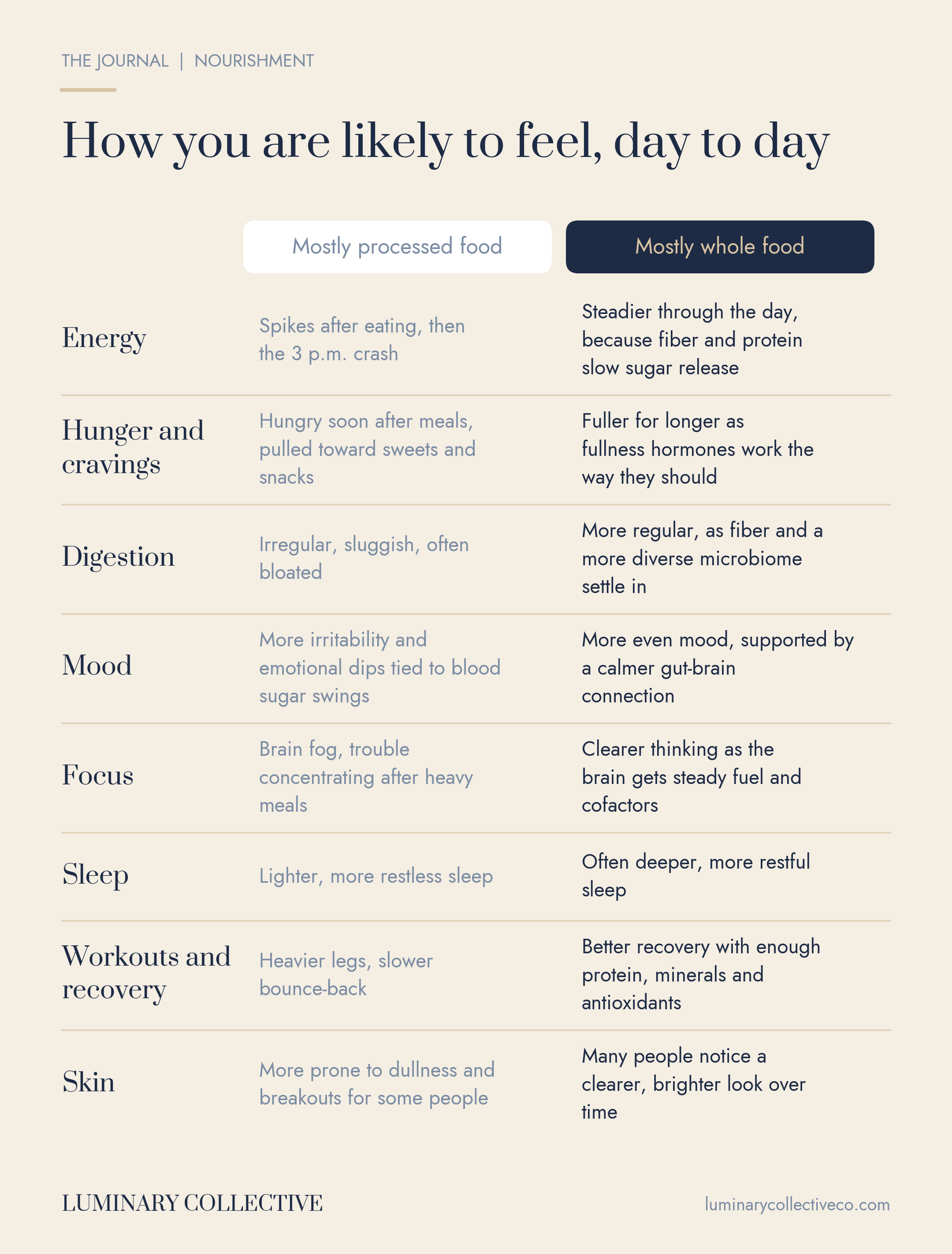
Most people who shift toward whole food notice steadier energy and fewer cravings first, then better digestion, mood and focus over the following weeks. Everyone is different, but the pattern follows directly from the biology above.
A realistic timeline
The first few days: Blood sugar steadies, so the mid-afternoon slump usually softens first. Cravings may actually feel louder at the start. That is normal and it passes.
One to two weeks: Your gut microbes begin shifting within days of a diet change. Digestion becomes more regular. If you add fiber quickly you may feel gassy or bloated, which is a sign to go slower and drink more water, not a sign it isn’t working.
Four to six weeks: Energy, sleep and mood feel noticeably more stable. Taste buds adjust, so fruit tastes sweeter and very sugary foods start to taste like too much.
Three months and beyond: Changes show up in markers like blood pressure, cholesterol and blood sugar, and eating well starts to feel like who you are rather than something you are trying.
How it changes your life over the long run
The daily wins add up to a different life trajectory. Better food will not guarantee you never get sick, but it tilts the odds meaningfully in your favor.
More healthy years, not just more years. The fiber research above ties high-fiber eating to 15–30% lower risk of early death, heart disease, stroke, type 2 diabetes and colorectal cancer.
A steadier mind. Diets built on whole foods are consistently linked to lower rates of depression and anxiety, and the SMILES trial showed diet can be a real part of treatment.
A body that keeps up with you. Enough protein, calcium, vitamin D and magnesium protects muscle and bone as you age, so you can keep lifting, hiking, dancing and carrying the people you love.
Less inflammation, day in and day out. Lower chronic inflammation means less wear and tear on your blood vessels, joints, brain and skin.
More of you available for what matters. When you are not fighting crashes, fog and cravings, you have more energy for your work, your relationships and your creativity.
That last point may be the most important. Food is not only about disease prevention. It is about how present and alive you get to feel in your own life.
Your nourishment plan: start today
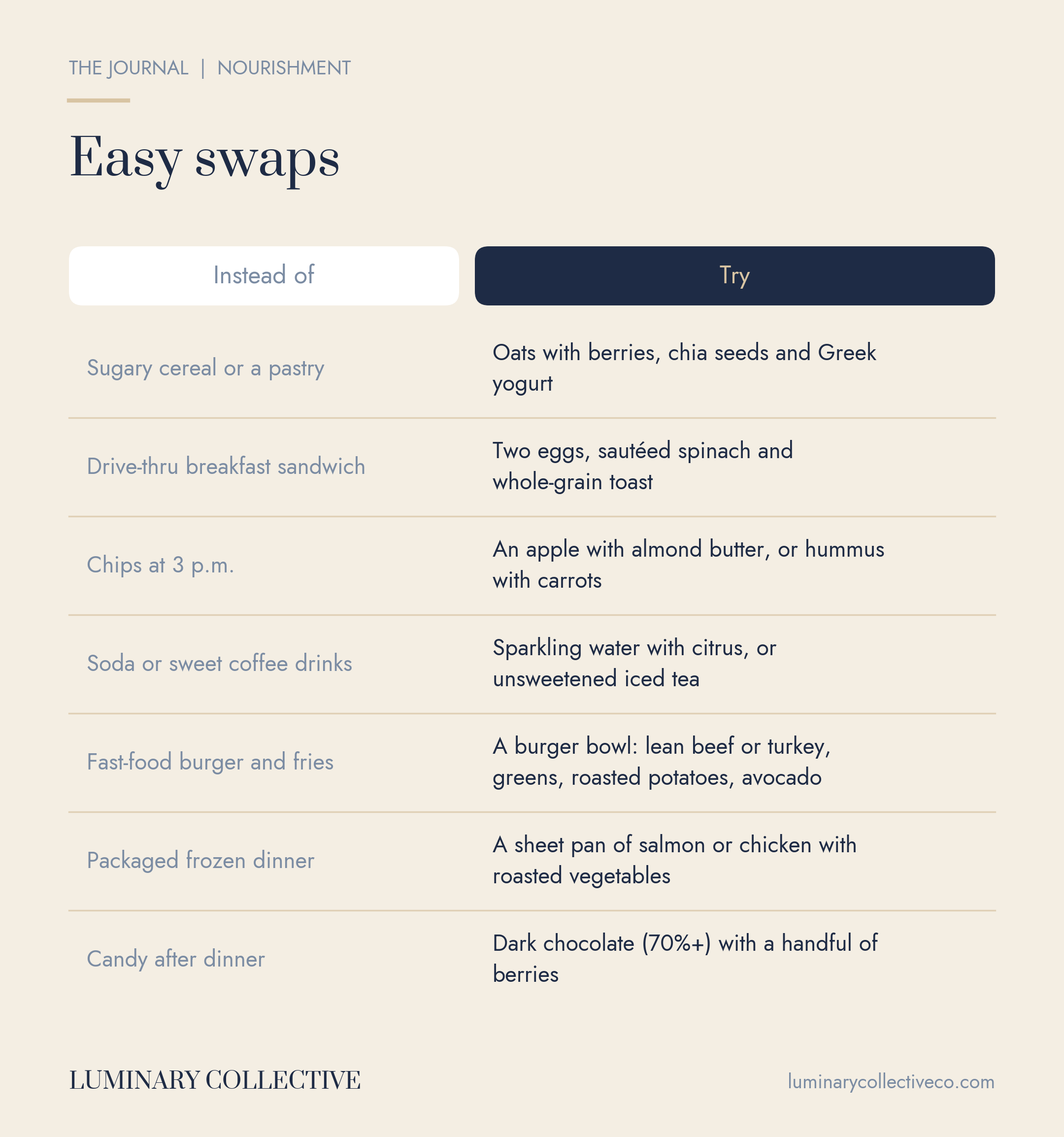
You do not need a perfect diet. You need a simple framework you can repeat. Focus on adding good things first; the processed foods naturally get crowded out.
Build a nourishing plate
At most meals, aim for:
Half the plate: vegetables and fruit, in as many colors as you can
A quarter: protein from real food (a palm-sized portion, roughly 20–30 grams)
A quarter: fiber-rich carbohydrates such as oats, quinoa, brown rice, sweet potatoes, beans or whole-grain bread
A thumb or two: healthy fats such as olive oil, avocado, nuts, seeds or salmon
Six daily anchors
Protein at every meal. It keeps you full, steadies blood sugar and protects muscle.
Work up to 25–35 grams of fiber a day. Add about 5 grams a week and drink more water as you go, so your gut can adjust comfortably.
Aim for 30 different plants a week. Vegetables, fruits, beans, whole grains, nuts, seeds, herbs and spices all count. Research from the American Gut Project found people eating 30 or more plant types a week had more diverse gut microbes than those eating 10 or fewer.
Add one fermented food a day. Plain yogurt, kefir, kimchi, sauerkraut or miso.
Hydrate first. A glass of water when you wake and one with each meal. Mild dehydration can feel a lot like hunger and fatigue.
Eat slowly and without screens when you can. Fullness signals take about 20 minutes to reach your brain, and ultra-processed food is designed to outrun them.
Easy swaps
A sample nourishing day
Breakfast: Greek yogurt bowl with berries, ground flax, walnuts and a drizzle of honey
Lunch: Big salad with mixed greens, chickpeas, grilled chicken, cucumber, tomatoes, quinoa and olive-oil lemon dressing
Snack: Apple with almond butter, or a small handful of nuts and a clementine
Dinner: Salmon, roasted sweet potato and broccoli, with a side of sauerkraut
Throughout: Water, herbal tea, and a colorful mix of plants
Make it stick
Think 80/20. Nourish yourself most of the time and enjoy the birthday cake without guilt. Consistency beats perfection.
Shop the edges and read labels. If the ingredient list is long and full of words you would not cook with, it is probably ultra-processed.
Prep one thing on Sunday. A pot of grains, a tray of roasted vegetables or a batch of hard-boiled eggs makes the rest of the week easier.
Use smart shortcuts. Frozen vegetables, canned beans and rotisserie chicken are affordable, fast and still real food.
If you have a medical condition, food allergies or intolerances, are pregnant, or take medications, check with your doctor or a registered dietitian before making big changes. They can help tailor this plan to you.
You deserve to be held up well
Your body has carried you through every hard day you have ever had, often on very little. Imagine what it can do when you give it what it actually needs.
You do not have to overhaul everything by Monday. Add one vegetable to lunch. Swap one afternoon snack. Try one new plant this week. Each choice is a message to your body and mind that they matter.
Your energy, your clarity, your mood and your consciousness itself are built from what you feed them. You deserve nourishment that holds you up, and it is never too late to start.
With Warmth,
Hannah
References
Williams AM, et al. Ultra-processed Food Consumption in Youth and Adults: United States, August 2021–August 2023. NCHS Data Brief No. 536, 2025.
Lee SH, et al. Adults Meeting Fruit and Vegetable Intake Recommendations — United States, 2019. MMWR, 2022.
Clemens R, et al. Perspective: Closing the Dietary Fiber Gap. Advances in Nutrition, 2016.
Reynolds A, et al. Carbohydrate quality and human health: a series of systematic reviews and meta-analyses. The Lancet, 2019.
Hall KD, et al. Ultra-Processed Diets Cause Excess Calorie Intake and Weight Gain. Cell Metabolism, 2019.
Lane MM, et al. Ultra-processed food exposure and adverse health outcomes: umbrella review. BMJ, 2024.
Wastyk HC, et al. Gut-microbiota-targeted diets modulate human immune status. Cell, 2021.
Jacka FN, et al. A randomised controlled trial of dietary improvement for adults with major depression (the SMILES trial). BMC Medicine, 2017.
McDonald D, et al. American Gut: an Open Platform for Citizen Science Microbiome Research. mSystems, 2018.